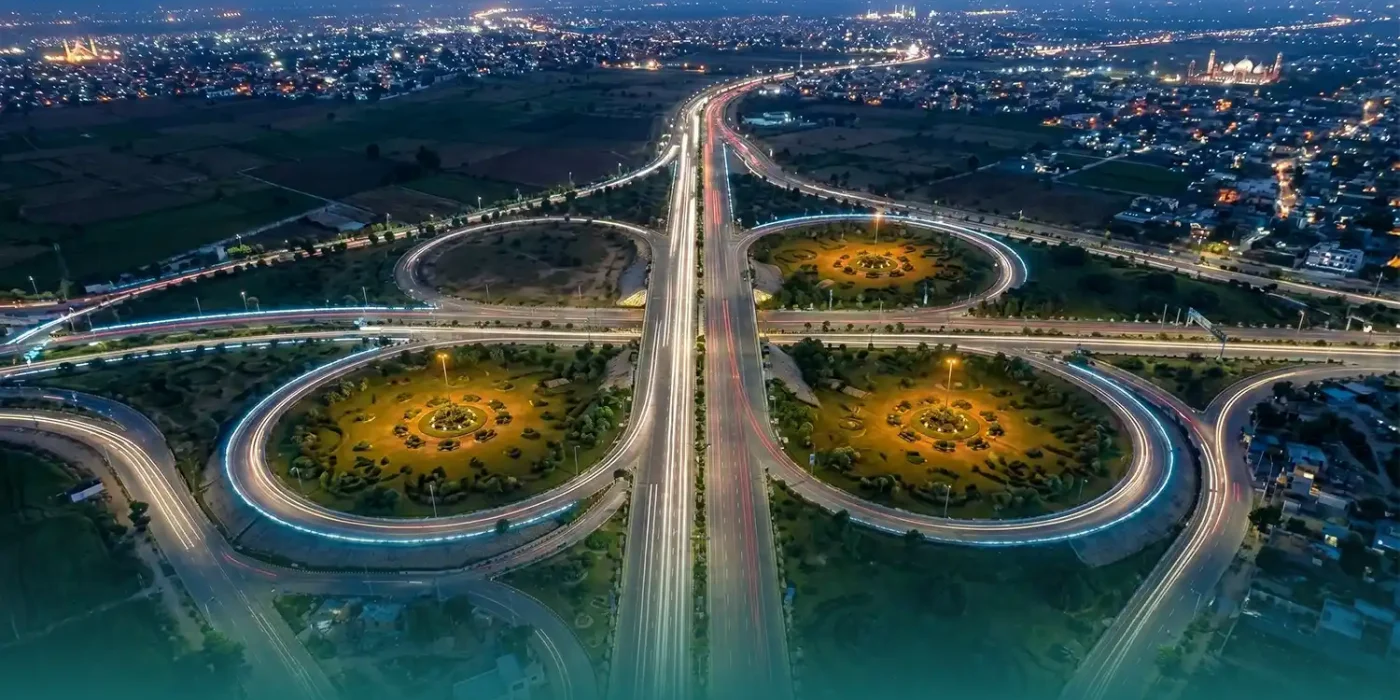
Rawalpindi Ring Road is one the biggest projects of 2026, expected to shift the real estate dynamics. It is not just another road project. It is a major access corridor that can reshape how buyers, commuters, developers, and investors move across Rawalpindi’s growth belt.
As of April 2026 reporting, the project is a 38.3 km corridor with five interchanges at Banth, Chak Beli Khan, Adiala Road, Chakri Road, and Thalian. The route is actively being pushed toward functionality while the Thalian interchange itself is being handled separately, which shows how important this corridor has become for traffic flow and future real estate demand.
The question is no longer about which society is “near” Rawalpindi Ring Road. It’s about which projects have real access, which locations sit near key movement corridors, and which societies could see the strongest long-term demand once connectivity improves.
In this guide, you will know the Rawalpindi Ring Road route, the importance of each interchange, the projects most likely to benefit, and why location near a major access corridor actually matters.
What Is Rawalpindi Ring Road?
Rawalpindi Ring Road is a six-lane regional corridor planned to connect Baanth on N-5 with Thalian on M-2 and reduce pressure on congested city traffic routes. Current reporting also ties the project to broader economic activity through an industrial zone planned along the corridor, which means the road is being viewed as both a traffic solution and a development potential.
For the property market, this matters because roads do more than move cars. Good roads change travel patterns, shorten routes, improve access to motorways, and make peripheral land more usable for housing, commerce, and logistics. That is usually when buyers start paying more attention to corridors that were once treated as secondary.
Rawalpindi Ring Road Route Explained
The current Ring road framing places the route from Baanth on the N-5 side to Thalian on the M-2 side. Along the way, it links important movement corridors around Chak Beli Khan, Adiala Road, and Chakri Road, creating a far more direct traffic flow for southern and western Rawalpindi.
That route matters because it connects several areas buyers already watch closely. When a road ties N-5, M-2, airport-facing zones, and major local roads together, it turns scattered housing segments into a more connected real estate belt.
In simple terms, the Rawalpindi Ring Road is a connectivity junction. The projects that benefit most are usually the ones that sit on or near frequently used roads, interchanges, and direct approach routes rather than those that only appear close on a brochure map.
Why the Interchanges Matter So Much
Interchanges decide who gets practical value from a major road. A society can market Rawalpindi Ring Road all day, but if access is confusing, indirect, or time-consuming, the actual benefit stays limited.
Banth Interchange
Banth matters because it anchors the N-5 side of the project. Any area that gains smoother movement toward GT Road and the wider Rawalpindi entry side gets a clear mobility advantage from this end of the corridor.
Chak Beli Khan Interchange
Chak Beli Khan is important because it opens a key mid-corridor access point. For investors, this kind of interchange can increase the usefulness of surrounding land over time, especially where future development depends on easier road movement.
Adiala Road Interchange
Adiala Road is one of the most important real estate angles in this whole discussion. It directly affects how buyers assess societies in that corridor, especially projects that rely on smoother access to Rawalpindi, Islamabad, GT Road, and motorway-linked routes.
Chakri Road Interchange
Chakri Road matters because it sits close to large-scale development and airport-linked movements. Projects in this belt often attract interest from buyers who want motorway-side access and from investors who think in terms of future expansion, not just present-day commuting.
Thalian Interchange
Thalian is strategically important because it connects the Ring Road to M-2 movement and the airport-facing side of the region. In April 2026, Dawn reported that the Ring Road may be made functional first while the dedicated Thalian interchange is handled later, which shows how critical this end of the corridor is to traffic planning.
What Makes a Project a True Rawalpindi Ring Road Beneficiary?
Not every society near Ring Road will benefit in the same way. The strongest beneficiaries are usually the ones with practical access, location strength, and usable movement links that save real time for residents and investors.
A project becomes a serious beneficiary when it checks a few clear boxes. It should sit near a meaningful access corridor. It should connect well to a major road or interchange. It should make daily movement easier, not just sound good.
This is where many buyers get misled. “Near Rawalpindi Ring Road” is not enough. The better question is whether the project has a direct, efficient, and practical route to the corridor that supports livability, resale appeal, and long-term demand.
Top Rawalpindi Ring Road Beneficiary Projects in 2026
There are a number of housing societies near Rawalpindi Ring road, but to understand which project is the biggest beneficiary, we need to see direct connectivity, proximity to interchanges, and overall integration with the road itself. In this regard, RUDN Enclave appears to be the biggest beneficiary. Here’s why.
RUDN Enclave
At the intersection of Adyala Road and the Rawalpindi Ring Road, RUDN Enclave has a “Zero KM” distance from the project. It benefits directly from the Adyala Interchange and Chakri Interchange, as the society’s main gate is on the Ring Road itself.
RUDN Enclave has immediate frontage and dedicated access points towards Ring road. So, our residents and visitors will have smooth entry/exit onto the high-speed corridor without navigating congested local roads.
Smooth Connectivity and Reduced Travel Times
Once operational, the Ring Road will cut commute times giving:
- Quick access to the M-2 Motorway, GT Road (N-5), and Islamabad.
- Significantly shorter routes to Islamabad International Airport.
- Bypassing Rawalpindi’s city center traffic, connecting to broader regional networks.
RUDN Enclave is one of the most practical living society choice for professionals working in Islamabad or Rawalpindi who want convenience and avoid travelling hassle.
High ROI Potential
The Ring Road has already stimulated faster development in RUDN Enclave, with visible infrastructure progress, landscaping, and amenities.
Apart from our accessible location, we have our own master-planned features including a sports complex, skywalk, water theme park, hospital, education city, solar park and more. The investment has a high ROI potential not only in monetary terms but also the lifestyle we are building for you. A sustainable, wellness-driven, luxury lifestyle you would want for your family.
Why Location Near Major Access Corridors Matters More Than Hype
The biggest property gains do not come from hype alone. They come from roads people can actually use.
A society with practical access to Adiala Road, Chakri Road, GT Road, or a motorway-facing route usually holds more value than a society that simply claims to be “near Ring Road” without an efficient path to it. Commuters think about time, families think about convenience, and investors think about future demand. All three groups care about usable access.
That is also why interchange proximity matters so much. The road itself is important, but the true property value sits in how people enter, exit, and move through the region once the corridor becomes operational. And RUDN Enclave is directly connected to Adyala and Chakri Interchange cutting travel time and hassle.
How Rawalpindi Ring Road Can Affect Property Value
Infrastructure does not raise value automatically, but it often changes the direction of demand. When a major road cuts travel time, links local roads to bigger highways, and improves access to airports or motorways, more buyers start to see nearby projects as practical rather than distant.
That shift can support stronger inquiry volume, better resale interest, and more commercial attention around major corridors. The planned industrial zone along Rawalpindi Ring Road also strengthens the long-term development plan because transport corridors attract wider economic activity, not just housing demand.
Property appreciation depends on legal status, development pace, access quality, payment structure, and the project’s real market appeal. A road can support demand, but it cannot fix weak fundamentals, so we would advise to make decisions based on ground facts.
Final Thoughts
Rawalpindi Ring Road is no longer just a future promise. In 2026, it is one of the most important infrastructure work shaping buyer interest across Rawalpindi’s expanding property market. The route, the five interchanges, and the corridor’s connection to N-5, M-2, and major local roads make it a serious real estate signal.
The projects gaining the maximum benefit will be the ones with real access, smart location logic, and practical movement routes. That is why the “beneficiary projects” should always be judged through road access, interchange value, and on-ground usability.
For that reason, RUDN Enclave deserves real attention in this conversation. Its official location aligns closely with the Adyala Road and Ring Road , which makes it one of the strongest names to discuss in any serious guide on Rawalpindi Ring Road beneficiary projects.
FAQs
What are Rawalpindi Ring Road beneficiary projects?
These are housing societies or development zones that may gain stronger access, demand, and visibility because of the Rawalpindi Ring Road corridor. The strongest beneficiaries are usually projects with real access to major interchanges or connecting roads.
Which interchanges are part of Rawalpindi Ring Road?
Current 2026 reporting describes five interchanges: Banth, Chak Beli Khan, Adiala Road, Chakri Road, and Thalian.
Is RUDN Enclave a Ring Road beneficiary project?
RUDN Enclave is located at the intersection of Adyala Road and Rawalpindi Ring Road, so it is one of the most relevant and profitable projects in this corridor-based investment theme.
Why does interchange access matter more than simple proximity?
Because the real value comes from usable movement. A project can sit near the corridor on a map, but if access is weak or indirect, the benefit stays limited.
Can Ring Road increase property value?
It can support stronger demand and better market perception, especially where access improves in practical ways. But actual value growth still depends on legality, development progress, buyer demand, and overall project quality.