Pakistan’s housing societies have long sold the dream of luxury living. Grand gates, wide roads, polished brochures. But when the electricity goes out for six hours, when the water pressure drops to nothing, when the air grows thick with dust and heat, luxury feels like a very distant promise.
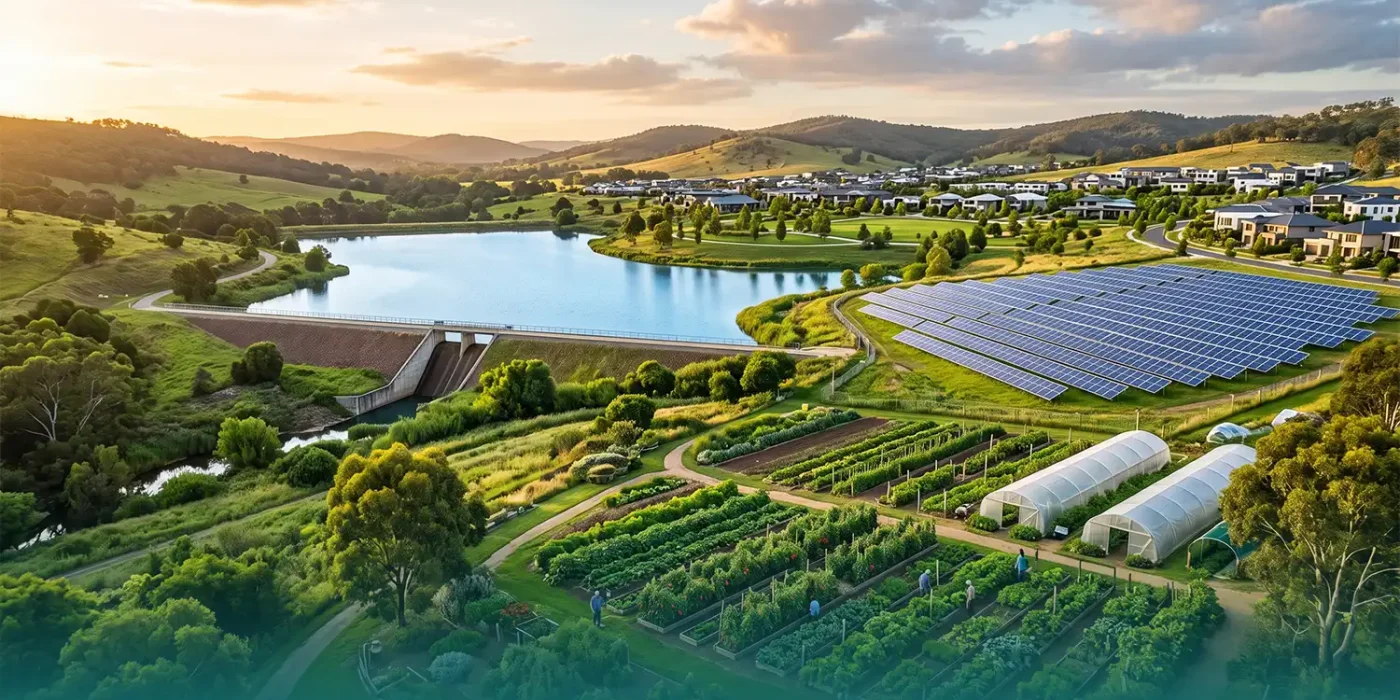
The amenities at RUDN Enclave are designed to make the society self-sufficient. The solar park to be enough for electricity production for residents, the dams to cater the water needs and horticulture areas to keep the environment healthy and sustainable for future generations.
The Solar Park
If you live in Pakistan, you already know what load shedding does to a household. It disrupts routines, damages appliances, kills productivity, and costs money. You’re either running a generator, buying UPS batteries, or simply sitting in the heat waiting for the power to come back. For families with young children, it’s exhausting. For anyone running a home business or working remotely, it can be genuinely crippling.
The standard solution in most housing societies is to tell residents to manage it themselves. Buy a generator. Install a UPS. Figure it out.
RUDN Enclave took a completely different approach. The society has its own dedicated Solar Park, an internal energy infrastructure built to reduce the community’s dependence on the national grid. This is not a small rooftop solar panel on the community office. This is a planned, society-level energy solution that feeds into the broader infrastructure of the development.
In a country dealing with one of the worst energy crises in its history, a society with its own solar infrastructure is not a luxury. It is a serious, long-term investment in the quality of daily life.
Jawa and Khasala Dam
Water scarcity is one of those problems that crept up quietly and is now impossible to ignore. Cities that had reliable water supply a decade ago are now facing daily shortages. Water tankers have become a fixture in even the most developed neighborhoods of Rawalpindi and Islamabad. Families plan their days around water availability. It has become, without most people quite realizing it, one of the defining quality-of-life issues in urban Pakistan.
RUDN Enclave is situated alongside two natural water sources, Jawa Dam and Khasala Dam, both part of the Soan River system. They are functioning dams that have served the region for decades, providing irrigation water, supporting local ecology, and acting as a long-term water resource for the surrounding area.
For residents, this means water security in a country where water security is becoming harder and harder to find. It means not having to schedule your mornings around when the supply might arrive, not having to store water in tanks as a daily precaution, not having to call a tanker service when the municipal supply falls short.
And beyond the practical reality, these two dams give RUDN Enclave a natural beauty and character that no amount of construction can manufacture. You barely get to have that kind of natural environment as part of your everyday view in a happening city like Rawalpindi Islamabad.
Horticulture and Green Cover
Urban heat is a real and growing problem. Rawalpindi and Islamabad, like most Pakistani cities, are getting hotter. Concrete absorbs heat. Vehicles produce emissions. Trees get cut down to make room for more construction. The result is that cities feel significantly warmer than they did twenty years ago, air quality has declined, and the simple act of spending time outside has become less pleasant and, for some people, genuinely unhealthy.
RUDN Enclave has made horticulture a serious, ongoing investment. This means trees planted across the society in a planned, systematic way. Green belts that serve a real environmental function, reducing heat, filtering air, providing shade, supporting the kind of natural ecosystem that makes an area genuinely more livable. It means a community that, over time, will be measurably cooler and cleaner than the concrete neighborhoods that surround it.
This kind of investment takes time to show results. Trees don’t grow overnight. Green cover develops over years, not months. Which is exactly why RUDN Enclave started early because the leadership understood that you cannot plant trees the day a community is complete. You plant them at the beginning, so that by the time families are settled and children are growing up, the environment is ready for them.
What Self-Sufficiency Really Means
There is a shift happening in how people think about housing societies in Pakistan. After years of being sold on gates and grand lobbies and amenity lists that never quite materialized, buyers are asking harder questions. Not just “what does this place look like?” but “what does this place actually deliver?”
The answer, increasingly, has to include the basics. Not just roads and plots, but energy, water, and a livable environment. Because without those three things, no amount of marble flooring or themed parks makes a community worth living in.
RUDN Enclave’s Solar Park, its dual dam access, and its active horticulture program are direct answers to Pakistan’s three most pressing daily challenges. They are the kind of facilities that don’t photograph well, don’t fit neatly into a sales pitch, and don’t generate excitement the way a water park announcement does. But they are the facilities that matter at 10pm when the power is stable. They matter on a Tuesday morning when the water runs without interruption. They matter on a hot afternoon when your street has enough shade to make walking comfortable.
See It for Yourself
Reading about a society is one thing. Walking through it is another. RUDN Enclave invites you to come and see the development, the facilities, and the progress on ground because the best argument for what’s being built here isn’t words. It’s what you see with your own eyes.